
Trimester 1:
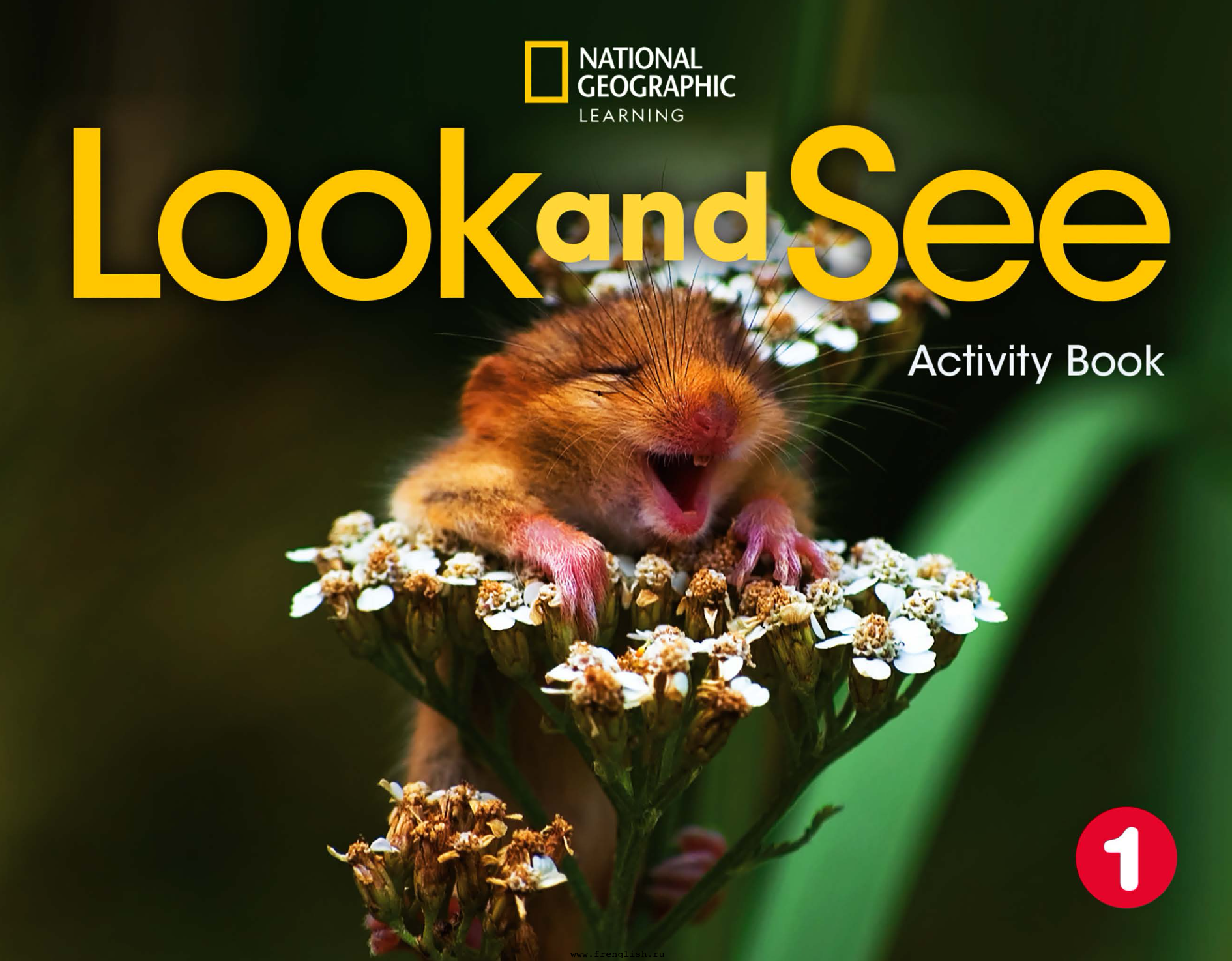
Look and See 1
The 1st trimester focuses on helping our students feel comfortable in English. Children learn basic words, simple sentences and classroom routines.
The goal is to understand simple English, respond with actions and short words.
What students will learn
How to greet others and say goodbye
Basic classroom words (book, chair, pencil, table)
Colors and simple descriptions
Toys, transportation, and everyday objects
Body parts and movement words
Food words and healthy choices
Family members and relationships
Farm animals and caring for animals
Clothes and dressing themselves
Nature and the world outside
-
By the end of the 1st trimester, students will be able to:
Understand and use simple English phrases ("Hello", "My name is…", "I like…")
Answer simple questions ("What is this?", "What color is it?", "How many?")
Follow classroom instructions ("Stand up", "Sit down", "Open your book")
Name common objects, animals, foods and colors
Use short sentences to talk about themselves and their world
-
Students will:
Learn key English letter sounds
Begin recognizing letters and sounds in words
Count and recognize numbers up to 10
-
Students will:
Practice making friends and sharing
Learn to take care of their belongings
Show kindness to family members and animals
Build confidence speaking in English
-
Students will:
Create simple art and craft projects
Learn through songs, movement and games
Explore basic age-appropriate science and social studies topics
Trimester 2:
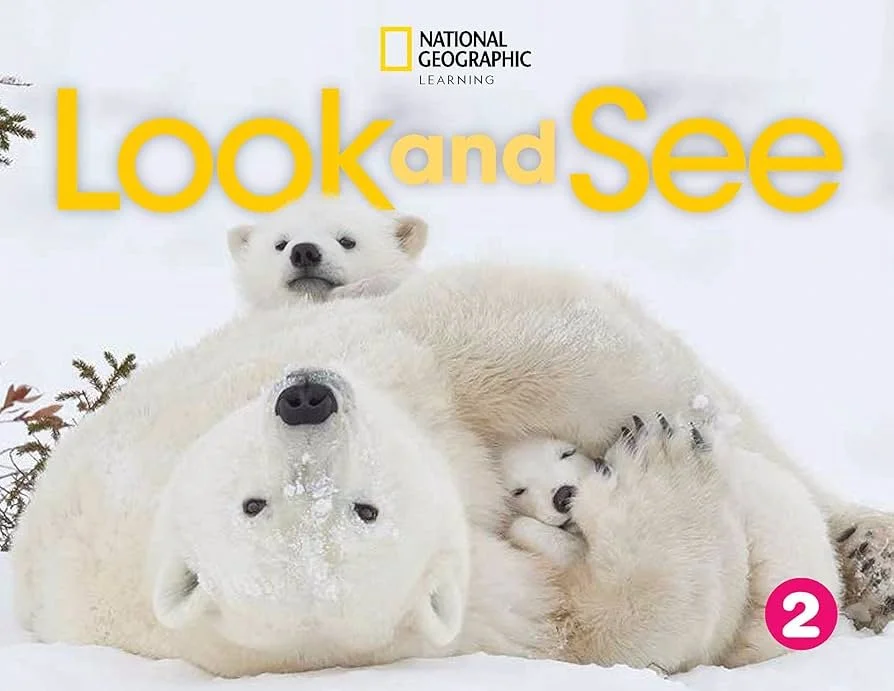
Look and See 2
The 2nd trimester builds on what they learned in Trimester 1. Students use longer sentences, learn to describe feelings and actions and talk more clearly about the world around them.
The focus is on communication, confidence and understanding others.
What students will learn
Classroom activities and school life
Feelings and emotions (happy, sad, angry, excited)
Animals and where they live
Clothes and dressing for the weather
Physical movement and outdoor play
Faces and body features
Personal belongings and taking turns
Babies, growth, and caring for others
Food, meals, and helping at home
Insects and caring for nature
-
By the end of the 2nd trimester, students will be able to:
Use simple full sentences to talk about themselves and others
Describe feelings, actions and basic needs
Ask and answer questions ("Are you happy?", "What is it?", "Where is…?")
Count and talk about numbers up to 10
Follow longer classroom instructions
-
Students will:
Learn more English letter sounds
Begin connecting sounds to written letters
Practice recognizing and using numbers 1–10
-
Students will:
Learn to talk about their feelings
Practice kindness, sharing and taking turns
Develop empathy by learning about babies and animals
Build independence and confidence
-
Students will:
Create hands-on projects and crafts
Learn through movement, music and play
Explore simple science and social studies topics
Ask questions and explore how things work
Trimester 3:
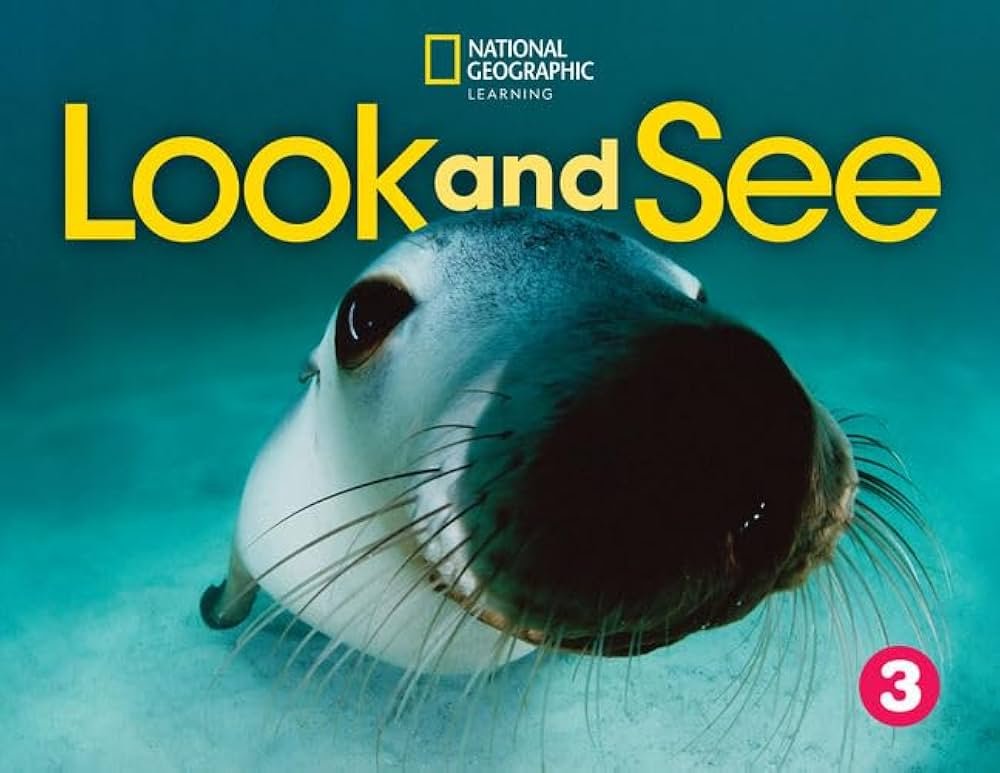
Look and See 3
The 3rd trimester advances the language skills developed in the previous trimesters. Students will transition from simple descriptions to discussing abilities, locations and quantities.
The focus shifts toward interactive communication, environmental awareness and exploring the wider world.
What students will learn
Actions like swimming, climbing, and throwing
Names of rooms (kitchen, bedroom) and household objects
Exploring tree houses and the outdoors
Discovering sea creatures like dolphins, turtles and sharks
Picnic foods, healthy eating, and sharing meals
Identifying complex shapes and counting to 20
Understanding the world and people
Identifying different sounds and musical instruments
-
By the end of the 3rd trimester, students will be able to:
Use structures like ("Can you swim?" / "I can/can’t")
Use prepositions to say where things are ("The toys are under the bed")
Count & Ask ("How many... are there?")
Use ("Do you like...?") to discuss food and activities.
-
Students will:
Practice specific letter blends and ending sounds (cat/rat, dog/log, run/sun, bug/mug)
Use numbers 1–20 by counting objects like ("fourteen crabs")
Connect new vocabulary to animals, shapes and home items.
-
Students will learn the values:
"Try again" when learning new skills.
"Help at home" and "Keep the beach clean"
"Be welcoming" and "Be polite"
"Try new things" in the context of healthy eating.
-
Students will:
Build projects like a shoebox home, a nest and a pyramid.
Explore ("Where does rain come from?) and ("What lives in a coral reef?")
Create a coral reef in a jar and a healthy food plate.
Engage with videos about 3D shapes, community helpers and musical instruments.
Book a Free Trial
30-min Class
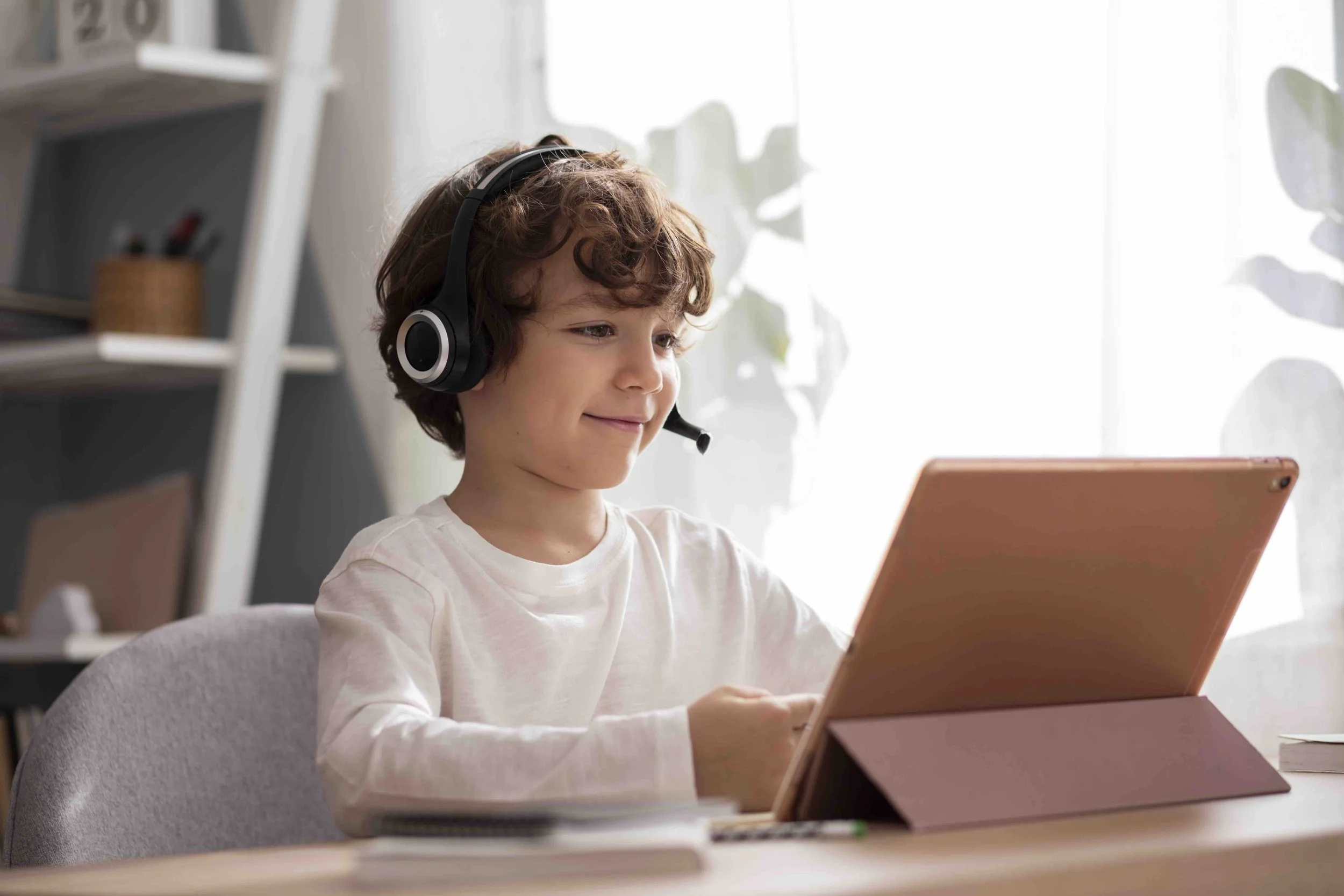
For homeschooled and traditionally schooled children.
This free trial is a real class. Not a demo. Not a sales talk with parents. It is a one on one English lesson with me, Teacher Sean. For 30 minutes, your child and I interact together. I listen and talk to them. I guide them and encourage them to speak.
During the session, I check:
• How your child understands spoken English.
• How confident they feel speaking
• What they already know and what they need next
Your child will:
• Be encouraged to speak English from the first minute
• Use real words and simple sentences
• See how my classes feel and flow
• Get a taste of the material used in the full program
Contact us
Interested in our small-group classes? Fill out some info and we will be in touch shortly. We can’t wait to hear from you!